The short answer
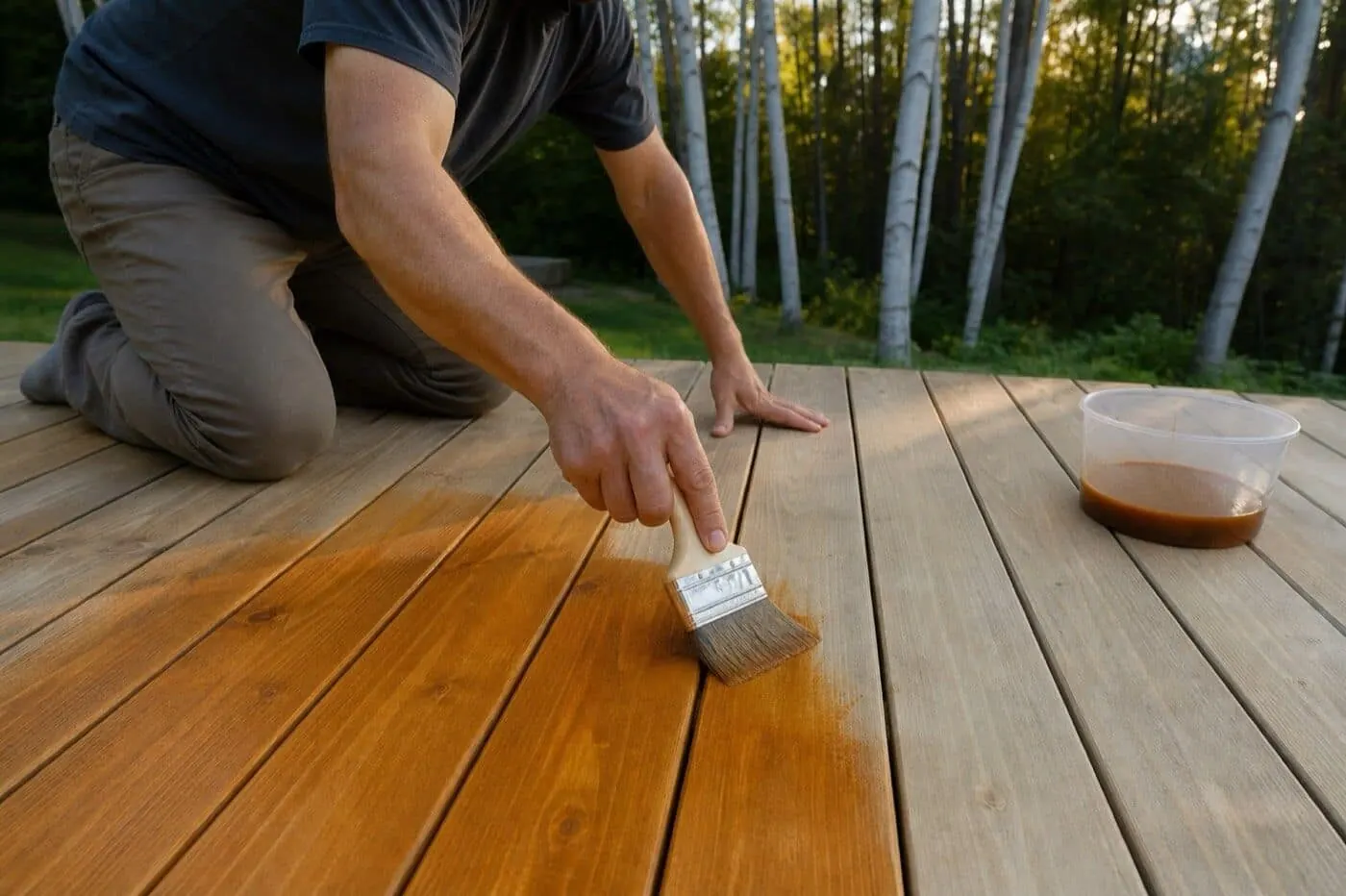
Stain, especially penetrating or semi-transparent stain, usually suits Minnesota decks because it soaks in and wears gradually instead of peeling through freeze-thaw and snow. Solid stain or paint can cover older, weathered or painted wood but needs more upkeep where feet and standing water wear it. The wood's condition decides.
On this page
Paint vs stain at a glance
Both can protect a deck. They differ in how they look, how they age and what they ask of you later.
- Look. Paint and solid stain give an even, opaque color. Penetrating and semi-transparent stains tint the wood and let it show through.
- Wood grain. Stain usually keeps the grain and texture visible, while paint can hide both, along with small flaws.
- How each wears. Stain tends to fade and thin gradually. Paint forms a film that can crack, blister or peel where water gets under it.
- Upkeep and recoating. Stain often only needs a cleaning and a fresh coat. Paint may need scraping and sanding in worn areas first.
- Switching later. Going from stain to paint is usually simple, but going from paint back to stain usually means stripping the old coating off.
What Minnesota weather does to a deck
A deck is one of the hardest-working surfaces on a house, and Minnesota gives it a full range of conditions.
- Freeze-thaw. Water that soaks into boards expands as it freezes, and repeated cycles can lift a surface coating.
- Snow and ice melt. Snow sitting on the boards keeps them wet, and shoveling and de-icing products can scuff and stress the finish.
- Spring moisture. Thaw and rain can keep wood damp for long stretches, which is hard on any finish that traps water.
- Summer sun. UV light fades color and dries out bare wood, and a south-facing deck may wear faster than a shaded one.
The same weather affects the rest of the house too, as covered in how long exterior paint lasts in Minnesota.
Check your deck's condition first
What is already on the wood often decides the finish more than personal taste does. Walk the deck and look for these.
- New or old wood. Brand-new boards can need time to dry out before a finish will soak in or stick. Older boards may be weathered and rougher.
- Existing coating. Work out whether the deck has paint, solid stain or a clear or semi-transparent finish. A fingernail scratch in an inconspicuous spot can help show which.
- Peeling or flaking. Loose coating usually has to be scraped or stripped back to sound edges before anything new will hold.
- Soft or gray boards. Gray, dry boards can be cleaned and recoated. Soft, spongy or rotted boards usually need repair or replacement first.
- The water-bead test. Sprinkle a little water on the boards. If it beads up, the old finish is still working. If it soaks in quickly, the wood is ready for a new coat.
A local licensed painter can look at the boards, rails and steps and tell you which finish fits. Decks and fences are listed with the other painting services.
When to do the work
Deck finishes depend on dry wood and mild weather, so timing matters as much as the product.
- Season. Dry, mild stretches from late spring to early fall usually work best. See the best time to paint a house exterior in Minnesota.
- Dry wood. Boards need to be fully dry after rain, washing or snowmelt, or the finish may not soak in or bond.
- Temperature. Stay within the range printed on the product label, for both the air and the surface of the boards.
- Dew and sun. Morning dew and hot direct sun can both interfere with how the finish dries.
Want a licensed local pro to take a look? Request a quote and attach a photo.