The short answer
Your exterior likely needs repainting when you see peeling, cracking or blistering paint, chalky residue, fading on sun-facing sides, bare or graying wood, or failing caulk. Small spots can be touched up, widespread wear calls for a repaint, and soft or rotting wood must be repaired first. A painter can assess it in person.
On this page
Warning signs to look for
Walk around the house in good daylight and look at every side, including the trim, the windows and the lower boards near the ground.
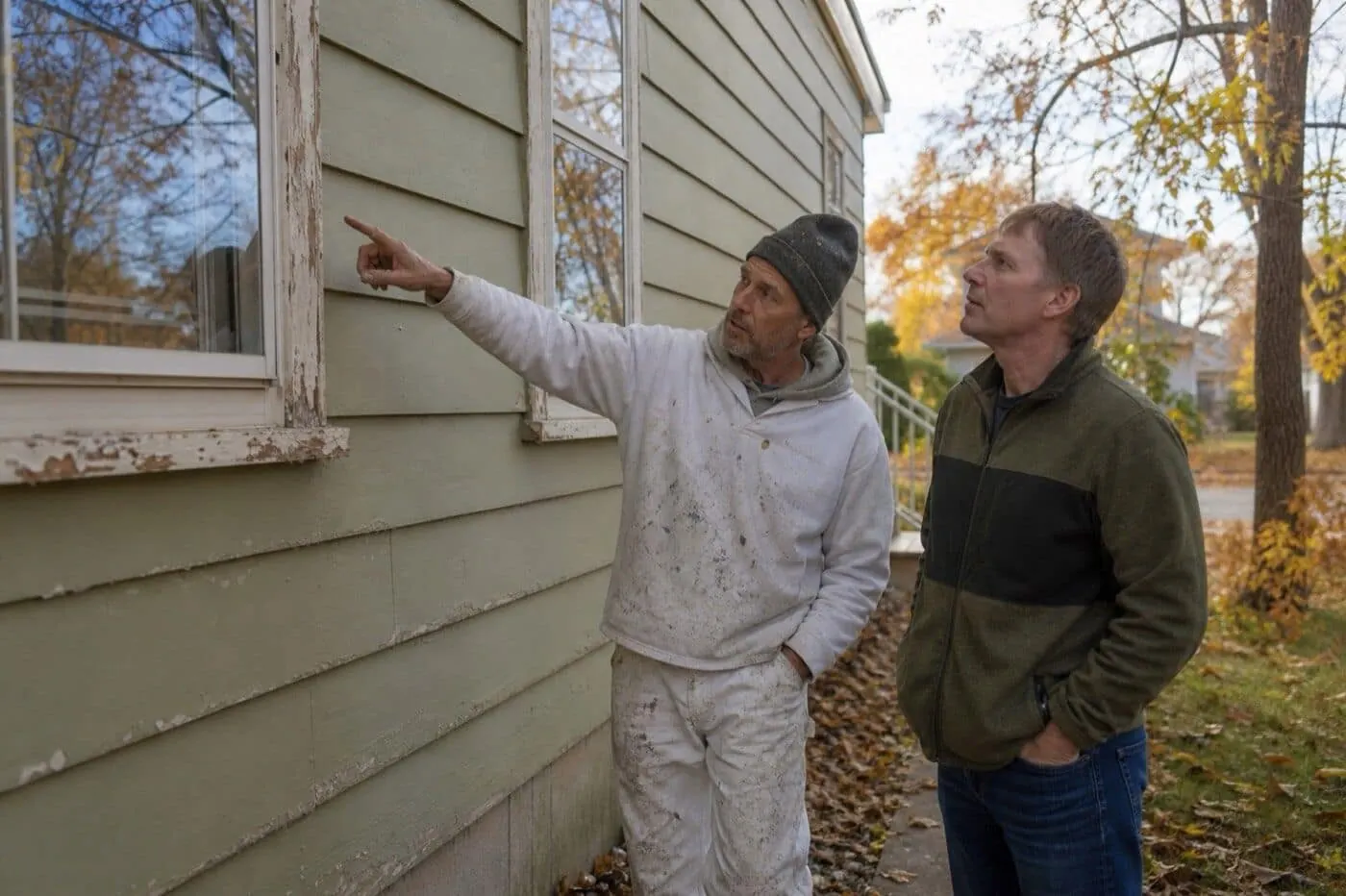
- Peeling, cracking or blistering paint. The coating has lost its grip or let moisture underneath.
- Chalky residue. A powder that rubs off on your hand means the paint surface is breaking down.
- Fading on sun-facing sides. Uneven color between sunny and shaded walls shows the paint is wearing thin.
- Bare or graying wood. Wood with no paint left is exposed to rain, snow and sun.
- Failing caulk. Cracked, shrunken or missing caulk around windows, doors and trim lets water in.
- Soft or rotting wood. Press a screwdriver tip gently into trim and sills; wood that gives way is damaged.
- Mildew. Dark or green patches, often on shaded sides, point to lingering moisture.
Touch up, repaint or repair first
Not every sign calls for the same response. Sorting what you see helps you decide what to do next.
- Touch up: a few small chips, one scuffed area or a short stretch of worn caulk, with the rest of the paint in sound shape.
- Repaint: widespread peeling or cracking, chalking across whole walls, noticeable fading, or bare wood on several sides.
- Repair first: soft or rotting wood, loose boards and caulk that has pulled away. Painting over damaged wood hides the problem and does not stop it.
- Clean and check: mildew should be treated and the moisture source found before paint goes on.
Age matters too. For how long exterior paint tends to hold up here, read how long exterior paint lasts in Minnesota. Already seeing flakes? Read why exterior paint peels.
Why Minnesota weather raises the stakes
Water gets into small gaps, freezes, expands and widens them, and that cycle repeats through the cold months. Bare wood is the most exposed, because it absorbs moisture and has no coating to slow it. That makes bare spots a priority: covering them sooner keeps a paint problem from turning into a wood problem.
Scheduling the repaint
Exterior paint needs suitable weather to bond and dry, so a repaint is best planned for a season when conditions allow. The guide to the best time to paint a house exterior in Minnesota explains what to watch for. Repairs, scraping and priming come first, and getting the house ready also helps; see how to prepare your home for painters.
Want a licensed local pro to take a look? Request a quote and attach a photo.