The short answer
In Minnesota's freeze-thaw climate, decks typically need restaining every two to three years with semi-transparent stain, and often longer with solid stain. Vertical fences usually last longer than deck boards. A simple water-bead test shows when the finish has stopped working.
On this page
How long does each type of stain last on a Minnesota deck?
The interval depends on how much of the finish sits on the surface and how much sun, water and foot traffic the boards get. These are typical ranges, not promises.
- Clear and penetrating finishes. These soak in and offer the least sun protection, so they tend to need attention sooner, sometimes every year or two.
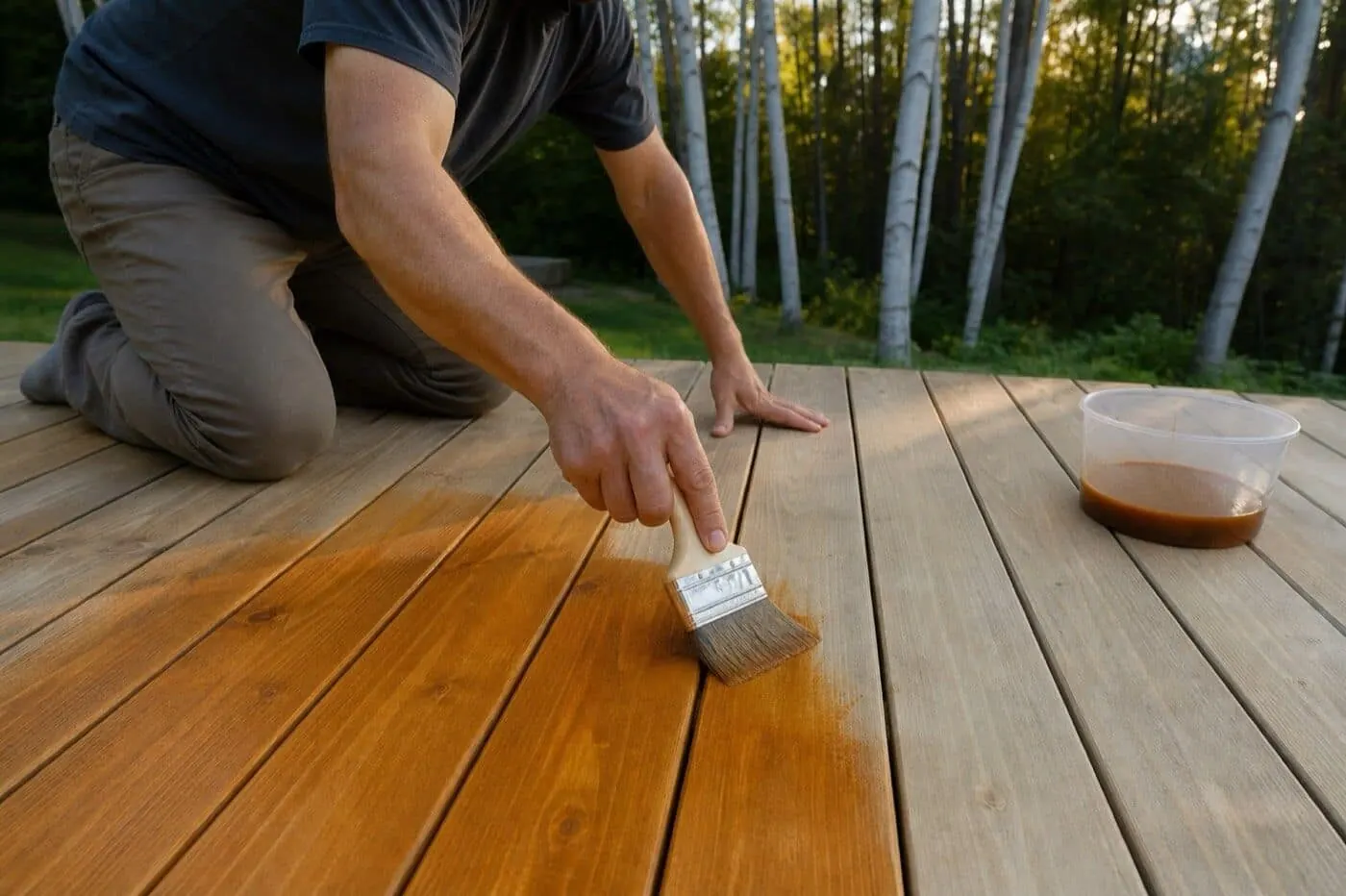
- Semi-transparent stain. Typically every two to three years on a Minnesota deck, a little sooner on a sunny, south-facing one.
- Solid stain. Often longer than semi-transparent stain, because the heavier pigment blocks more sun. Worn spots can still show up early on steps and traffic paths.
Whether to choose stain or paint in the first place is covered in should you paint or stain a deck in Minnesota.
How do you tell a deck is ready for new stain?
Watch the boards instead of the calendar. Three checks work for most decks.
- The water-bead test. Sprinkle a little water on the boards. If it beads up, the finish is still working. If it soaks in within a few minutes, the finish is spent.
- Graying and fading. Boards that have turned gray or chalky have lost their color and their sun protection.
- Wear in traffic paths. Thin or bare spots at the top and bottom of steps, around doors, under furniture and along rails go first.
Test several spots, since a shaded corner and a sunny stretch can age at different rates. Peeling or flaking means something other than normal wear is going on, so read why exterior paint peels.
Why do fences last longer than deck floors?
A fence and a deck face the same weather, but a fence has an easier life.
- Upright boards shed water. Rain and melting snow run off a vertical surface, while a deck floor holds puddles and snow.
- No foot traffic. Nobody walks, drags furniture or shovels across a fence.
- Less ground moisture. The tops of fence boards dry quickly, though the lowest boards near soil and sprinklers can stay damp.
So fences usually go longer between coats than the deck beside them. Check the sunniest side and the bottom boards first. The deck and fence staining page shows how a typical project is laid out.
When in the year should you restain?
Wood has to be dry and the weather mild for stain to soak in. Late spring through early fall usually offers the best window in Southeast Minnesota, after the boards have dried from snowmelt and before the first hard frost. Avoid wet boards, morning dew, hot direct sun and temperatures outside the range on the product label. The best time to paint a house exterior in Minnesota guide covers the same seasonal window.
What prep does a restain need?
A restain is mostly prep, and skipping it is what shortens the interval.
- Clean the surface. Dirt, mildew and gray surface wood have to come off so stain can soak in.
- Let it dry. Boards should be fully dry after washing, usually for a day or more.
- Repair and sand. Set or replace loose nails and screws, replace soft or rotted boards, and sand rough or worn spots.
- Deal with the old finish. Failing finish usually has to be stripped back to sound edges before new stain will hold.
A local licensed pro can look at the boards and tell you whether a clean-and-recoat is enough.
Wondering if your deck is due? Request a quote and attach a few photos, or visit the contact page.