The short answer
A typical single-family exterior often takes several working days to about two weeks. Prep, including washing, scraping, repairs and priming, and the weather drive the timeline. Minnesota's short painting season, plus dew, rain and temperature limits, can add days. A painter can give a schedule after seeing the house.
On this page
How does Minnesota weather affect the schedule?
Weather is the biggest wildcard outside. Paint needs dry surfaces and suitable air and surface temperatures, so a job can stop and start more than an interior one. Have vinyl siding? See can you paint vinyl siding.
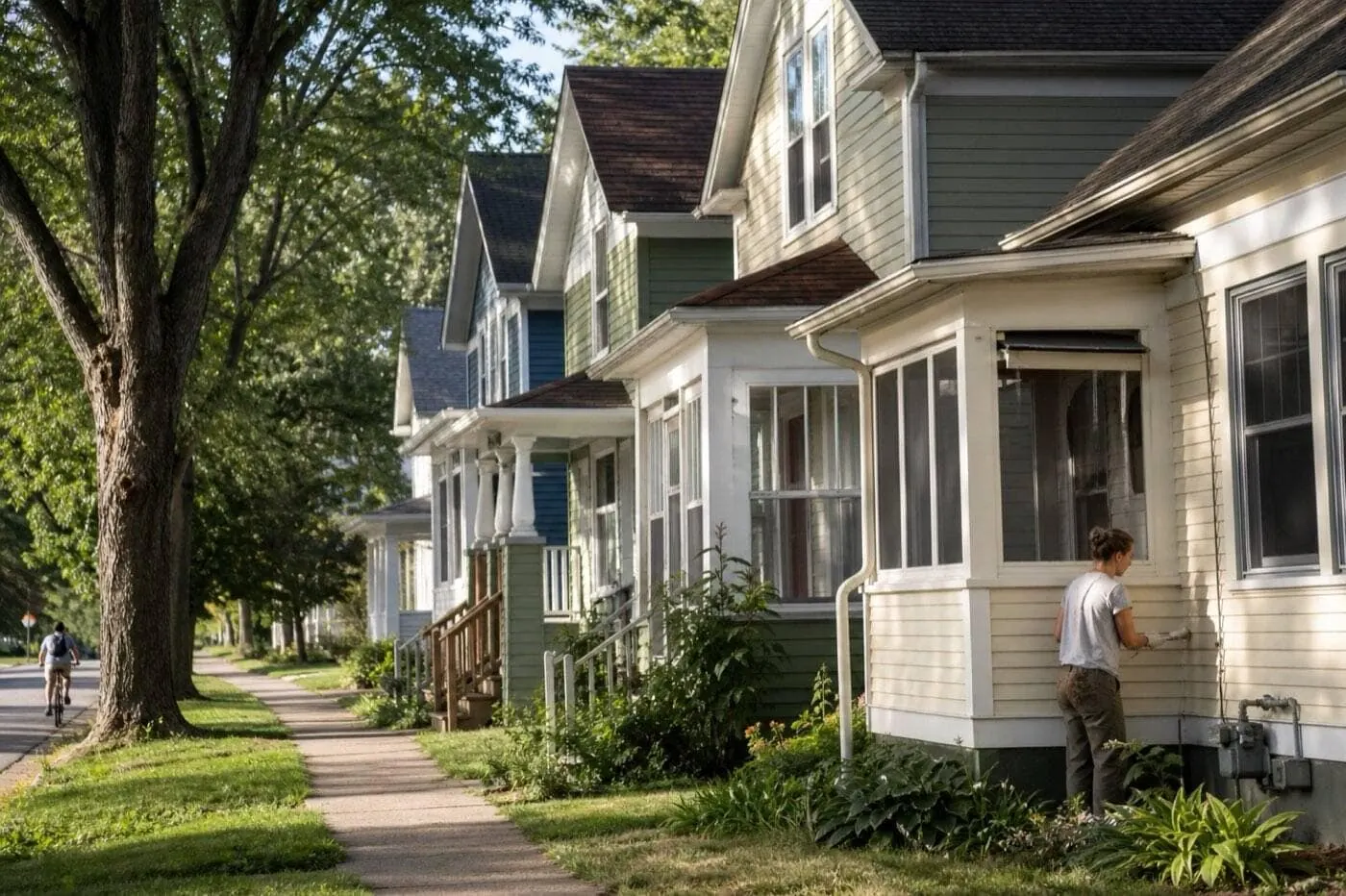
- Short season. Southeast Minnesota's painting window is limited, and busy stretches can make it harder to fit a job in. See the best time of year to paint a house exterior in Minnesota for how the season usually runs.
- Rain and dew. Wet siding has to dry before paint goes on, and morning dew can push the start of the day later.
- Temperature. Cool days and cold nights can rule out painting, because the paint label sets the temperatures it needs to cure properly.
- Wind and sun. Strong wind can carry dust onto wet paint, and hot direct sun can make paint dry too fast on one side of the house.
Because of this, a schedule is usually a range rather than a fixed number of days, and a few weather delays are normal.
What takes the most time on an exterior job?
On many houses, the work before the first coat takes as long as the painting. Cutting corners here is what often shortens how long the finish lasts, as covered in how long exterior paint lasts in Minnesota.
- Washing. Dirt, chalk and mildew are cleaned off, and the house then needs time to dry before work continues.
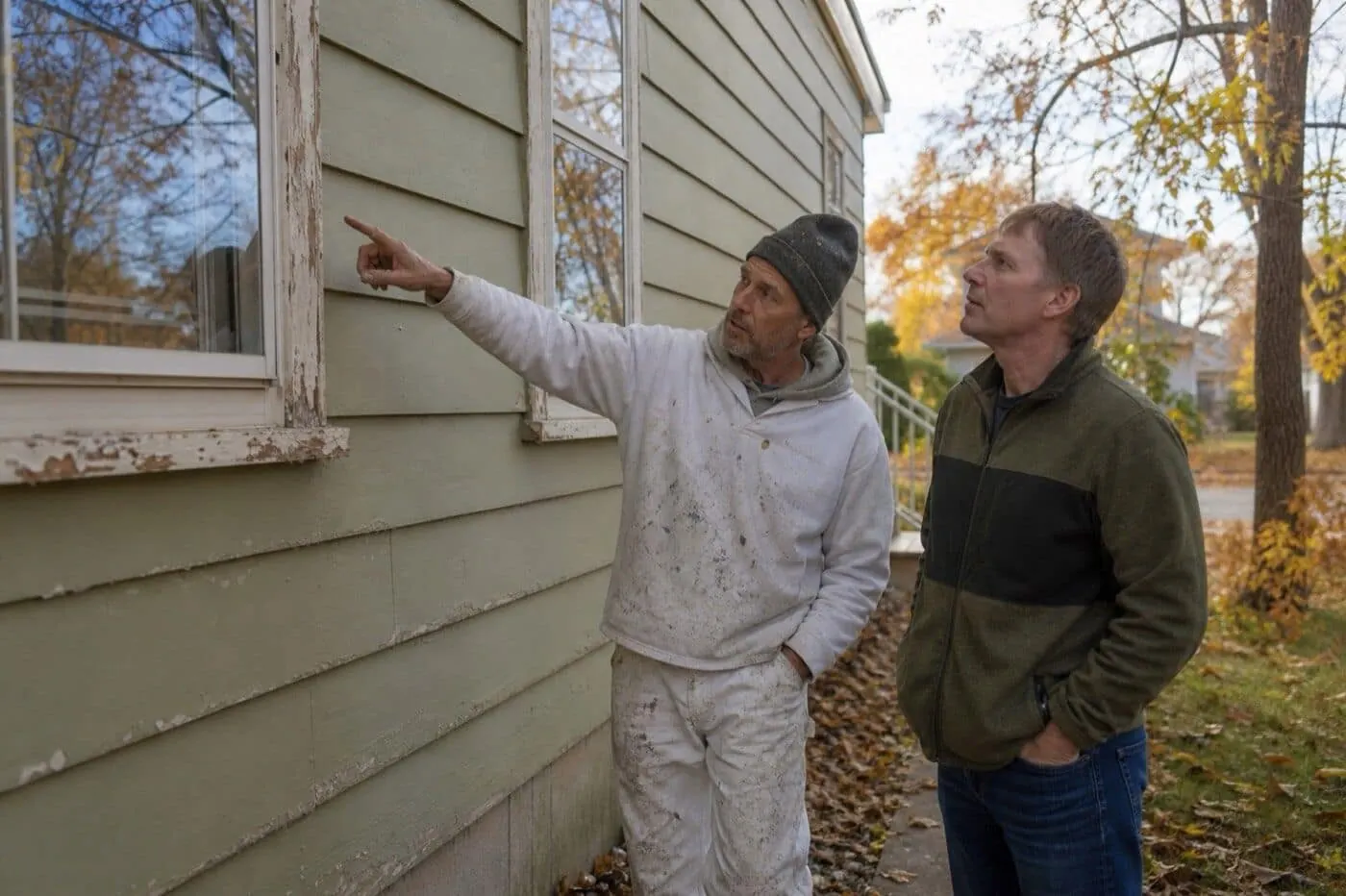
- Scraping and sanding. Loose and peeling paint is removed so new coats have something solid to hold on to.
- Repairs. Caulking gaps, patching holes and replacing rotted trim are done before painting, and wood repairs can add days.
- Priming. Bare wood, repaired spots and stains often need primer first, and it has to dry before the topcoat. The guide on whether you need primer before painting explains when it applies.
- Painting. Trim, siding and doors are painted in an order that keeps the work moving around the house.
If the house is showing wear, the signs your house exterior needs repainting can help you decide how much prep to expect.
Does house size and siding type matter?
Yes. More surface area takes more time, and the material changes the work.
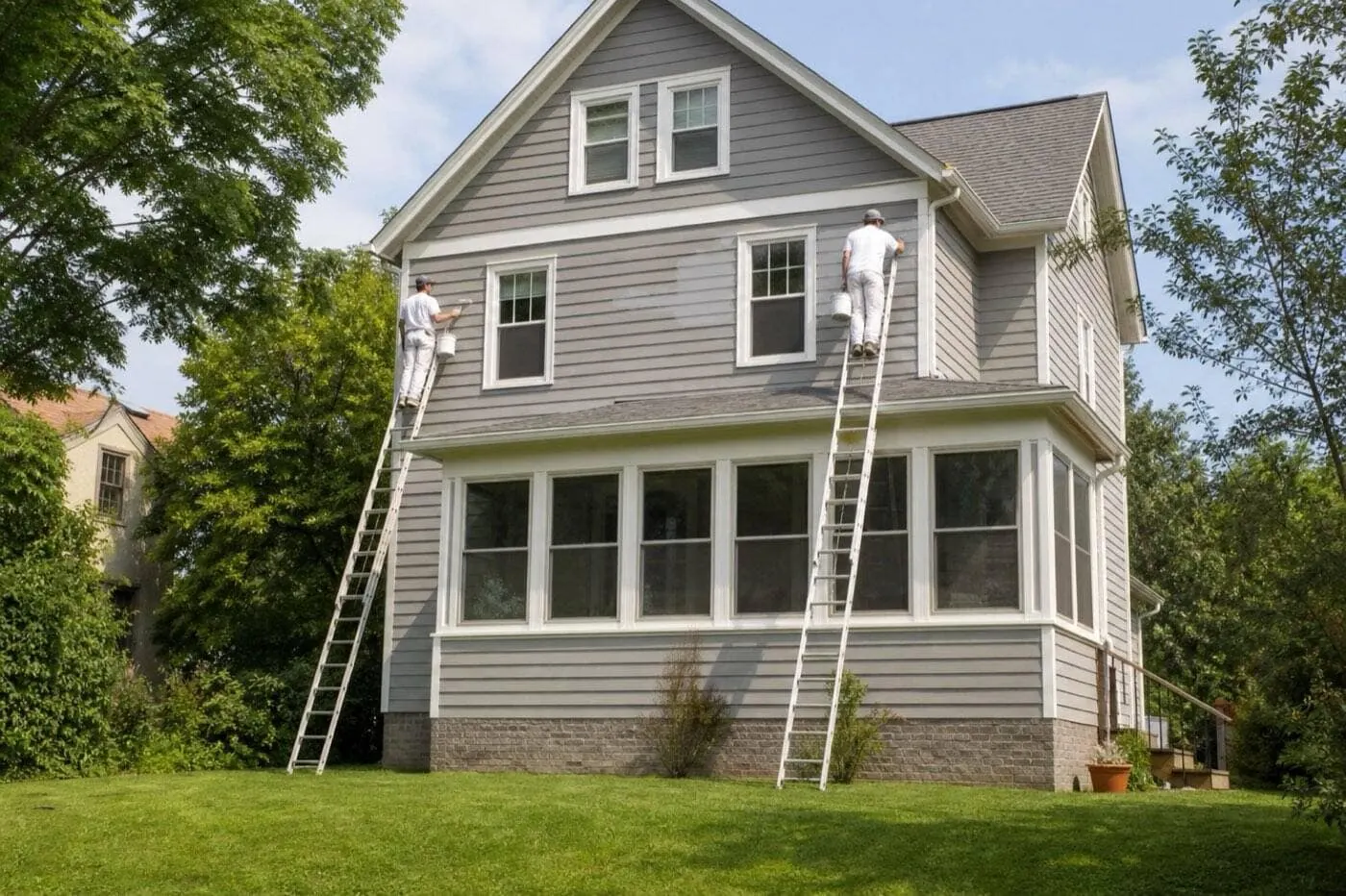
- Size and stories. A larger or taller house has more wall to cover, and upper floors add ladder and scaffold setup time.
- Siding type. Wood often needs more scraping, sanding and priming than newer siding, while rough or heavily textured surfaces take more time to cover.
- Detail and trim. Many windows, porches, railings and decorative trim slow the work compared with plain walls.
- Color change. A big shift from dark to light may need extra coats.
- Crew size. More painters often finish sooner, although drying time between coats does not shrink.
The exterior painting service page shows what a full job can include.
How long should paint dry between coats outside?
Follow the recoat time printed on the paint label rather than a general rule. Outdoor drying depends on the product, the temperature, humidity and how much sun and wind reach each wall. For the stages of drying and curing, see how long paint takes to dry.
- Dry to the touch is not ready to recoat. Paint can feel dry well before it is ready for another coat.
- Cool or damp days run slower. The same coat may need much longer on a humid morning than on a warm, breezy afternoon.
- Evening dew matters. Painters often plan the last wall of the day so the paint has time to set before dew settles.
Do I need to be home while the house is painted?
Usually not for the whole job, but a little planning helps the work run smoothly. It is useful to be reachable for color questions and to walk the house with the painter at the start and end.
- Clear the way. Move cars, patio furniture, planters and grills away from the walls so painters can reach them.
- Trim back plants. Bushes and branches against the siding slow the work and can get paint on them.
- Secure pets. Keep pets inside and away from ladders and wet paint.
- Settle colors early. Changing a color after work begins can add coats and delays.
The guide on how to prepare your home for painters has a longer checklist.
Want a licensed local pro to take a look? Request a quote and attach a photo.