The short answer
To paint a front door in Minnesota weather, pick a dry, mild day inside the temperature range printed on the paint can, with no rain, dew or frost expected until the paint cures. Clean and sand the door, prime bare spots, and use a satin or semi-gloss exterior paint. Skip cold snaps and hot direct sun.
On this page
What temperature and humidity work for painting a front door?
Every exterior paint lists a minimum application temperature on the can. Many water-based exterior paints say around 50°F, and some low-temperature formulas allow cooler days. Follow your can, because the label is the only number that applies to your product.
- Check the door, not only the air. A metal or dark door in sun can run much warmer than the air, and a shaded door can run colder. Aim for a surface within the label range.
- Watch the night low. Paint is still curing after dark. If the forecast drops below the label minimum or brings frost the same night, wait for a better day.
- Keep humidity moderate. High humidity slows drying and can leave a tacky or cloudy film. Labels often give a maximum humidity, so look for it.
- Avoid dew and rain. Morning dew can wet a door that looks dry. Start once the door is dry to the touch, and skip days with rain or fog in the forecast.
The same timing logic applies to the whole house, and the best time of year to paint a house exterior in Minnesota covers the season window.
How should you prep a front door before painting?
Prep decides how long the finish lasts. A door takes more hand contact, sun and weather than a wall, so it is worth doing in order.
- Remove or mask hardware. Take off the handle, deadbolt trim and knocker if you can. Otherwise mask them with painter's tape.
- Clean the surface. Wash off dirt, grease and cobwebs, then let the door dry fully before sanding.
- Scrape and sand. Scrape any loose paint and sand the surface to dull the old finish. Feather the edges of chipped spots so they do not show.
- Fill and prime. Fill dents and cracks with an exterior filler, then spot-prime bare wood, filler and any bare metal with an exterior primer.
- Check older paint. If the house was built before 1978, read the lead paint guide before sanding or scraping.
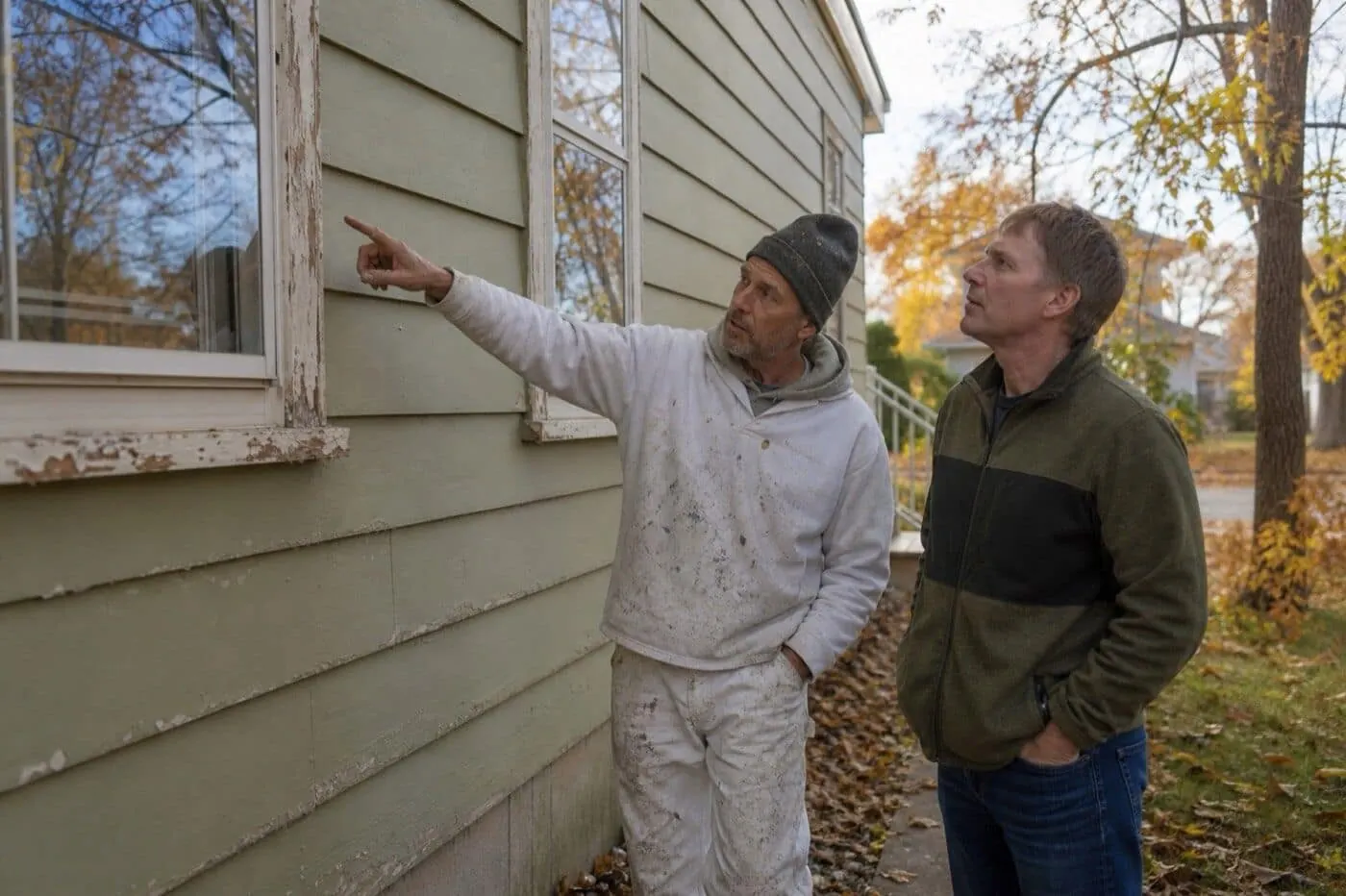
If the old paint is peeling in sheets, find out why first. Why exterior paint peels explains the usual causes, such as moisture and poor prep.
What sheen and paint type suit a front door?
Most people choose satin or semi-gloss for an entry door. A higher sheen wipes clean and resists scuffs and moisture better than flat, and it shows more surface flaws, so sanding and filling matter. Compare finishes in the paint sheen guide.
Use a paint made for exteriors, and match it to the door material. Wood, fibreglass and steel doors can have different primer needs, and the paint can or the manufacturer's data sheet lists what suits each surface. Dark colours absorb heat, so check the label for any warning about dark colours on a sun-facing door.
How do you time the job around a cold snap?
Minnesota weather changes fast in spring and fall, so plan for a window rather than a single morning.
- Look at the full forecast. You need dry, in-range weather for the painting day and the night after it. A cold snap that arrives overnight can stall the cure.
- Paint early in the day. Starting mid-morning, after dew burns off, gives the longest warm, dry stretch for the first coat to set.
- Allow time between coats. Cold and humid days stretch the recoat time on the can. Do not rush the second coat.
- Be gentle with a closed door. Fresh paint can stick to weatherstripping and the frame. Leave the door slightly open or wait until it is dry to the touch before closing it, and avoid a storm door latching against wet paint.
- Know when to wait. If the label range will not be met for days, waiting for spring or a mild stretch is better than painting into a freeze.
When should you call a pro?
Call a licensed local pro if the door has rot, heavy peeling or a failed finish down to bare wood, if it is a large or glass-panelled door, or if the weather window is too narrow for you to manage. They can also assess whether the door needs repair before painting.
A partner can include an entry door as part of exterior painting. Attach a photo of the door and its sun exposure when you request a quote.
Would you rather not repaint your entry door in a narrow weather window? Request a quote and attach a photo.