The short answer
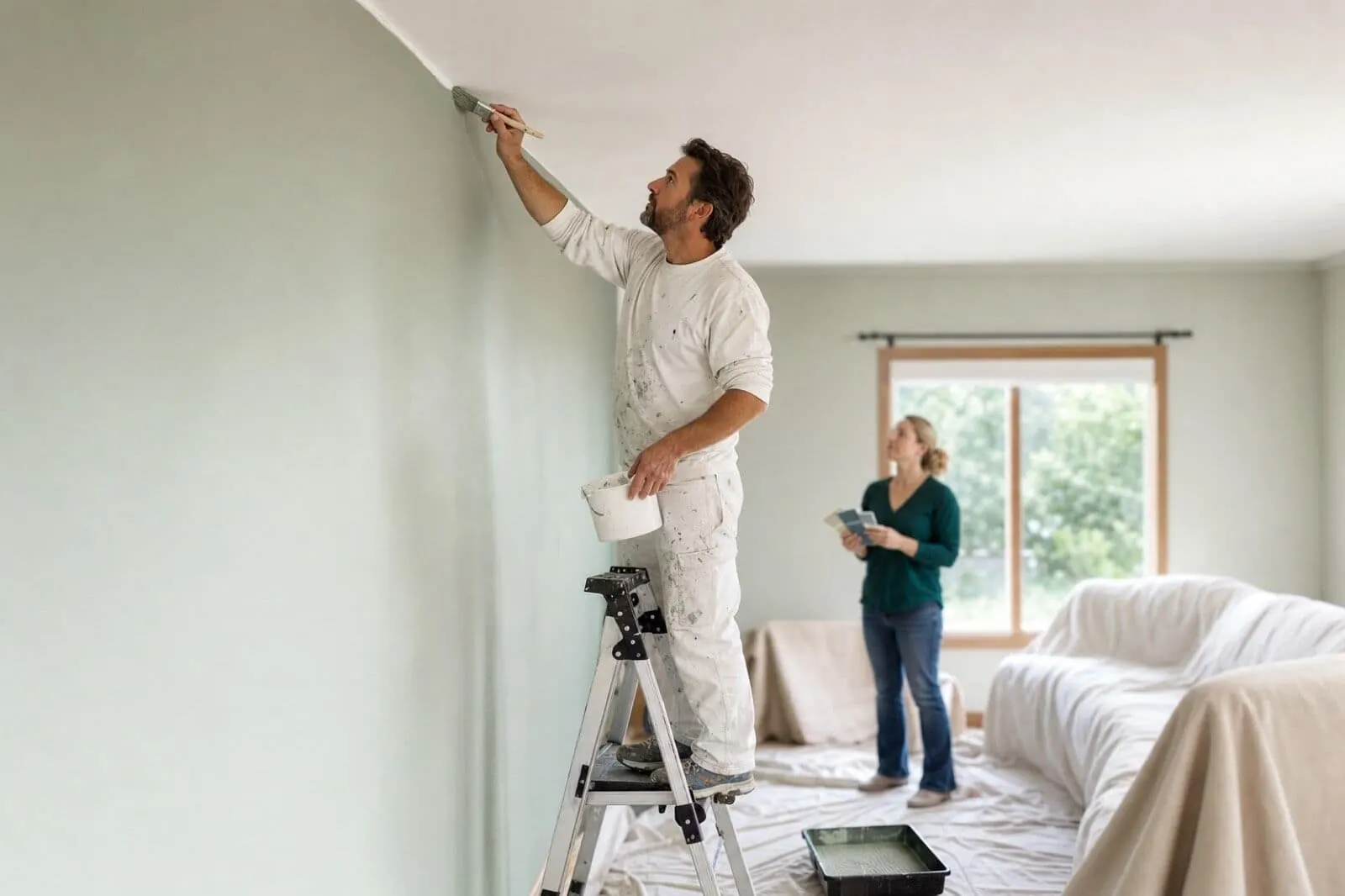
Most painters paint the ceiling first, then the walls, and the trim last. Trim is easier to keep neat with a small brush, and a wall can be cut in cleanly next to dry trim. Either order works if you tape carefully and let each coat dry before taping against it.
On this page
Which should you paint first, trim or walls?
The usual order is top to bottom and big to small: ceiling, then walls, then trim, then doors. Painting the walls first lets you roll quickly without worrying about getting paint on the trim, and the trim finish goes on last, when the room is already clean.
The reasoning is practical. A roller is fast but messy near edges, while a brush gives you control on narrow trim. Doing the messy, fast work first and the careful work last means the final result is the neat part.
Why do many painters paint the trim last?
There are a few reasons the trim-last order is so common.
- Drips and spatter. Rolling walls throws small spots. If the trim is not painted yet, spots on it are covered by the trim coat.
- A sharper edge. Trim paint is often a harder, glossier finish. A crisp line next to dry wall paint is easier to cut than the other way around.
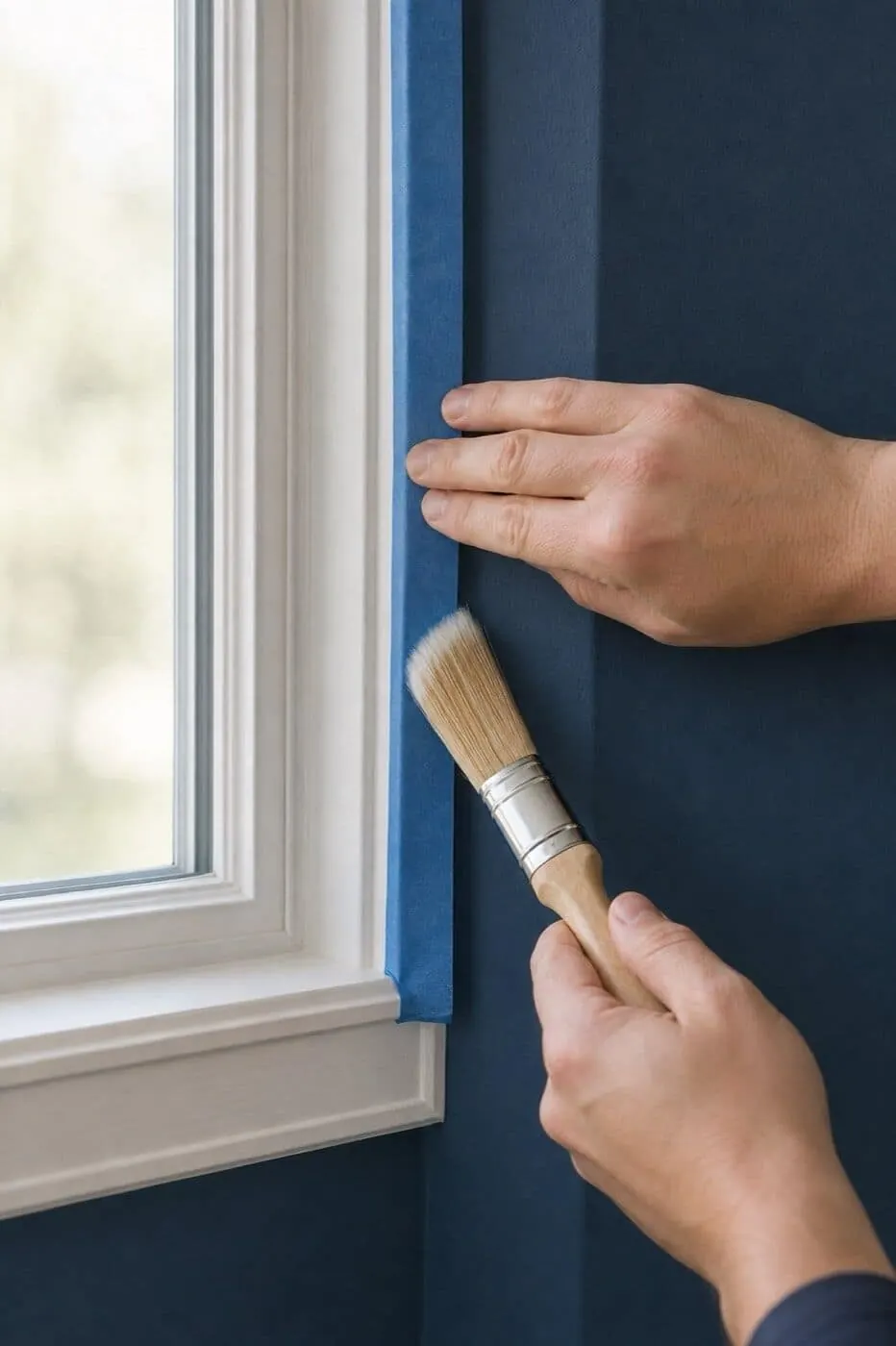
- Less taping. You can often skip taping the trim while you roll the walls, then tape the walls only if you want a very straight trim line.
- One clean finish. The last coat in the room is the one people look at up close, and trim is the part they touch and see most.
When does it make sense to paint the trim first?
Some jobs go better the other way around.
- New or bare trim. If trim is being replaced or needs full repainting with primer, doing it first lets it cure while you work on the walls. See whether you need primer before painting.
- A big color change on the walls. Painting glossy white trim first and then rolling a bold wall color against it is easier to tape, because the dry trim finish takes tape well.
- Spray finishing. Pros who spray trim often do it first, before furniture or floors are covered for the wall work.
If you choose trim first, protect it with painter's tape once it is fully dry, and then paint the walls. Check the can for the time to wait before taping. The guide to how long paint takes to dry explains the dry and cure stages.
How do you keep a clean line where trim meets the wall?
The line between the two is what people notice, so it is worth the extra care.
- Fill and caulk the gap. A thin bead of paintable caulk between the wall and the trim hides small gaps and gives a straight edge to paint to.
- Tape only when the paint is dry. Press the tape edge down firmly, and remove it while the last coat is slightly soft so the paint does not peel with it.
- Use a good angled brush. Load it lightly and draw a steady line along the edge instead of dabbing.
- Pick the right sheen. Trim is usually satin or semi-gloss so it wipes clean. The guide to interior paint sheen by room covers the choices.
What should be painted after the trim?
Doors and any built-ins come last, and so do touch-ups. Walk the room in good light once everything is dry and mark small misses with a bit of tape. If you would rather have a licensed local pro handle the careful edge work, see interior painting.
Want a clean trim line without the taping? Request a quote and attach a photo of the room.